Warsaw Barbican
Back to all places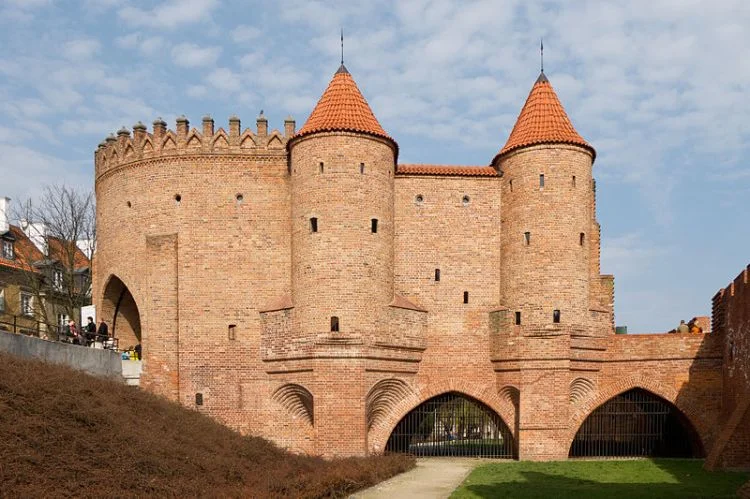
The Warsaw Barbican is one of the last surviving remains of the extensive network of walls, fortifications and gates that once surrounded the city. It was built in 1540 and designed by Venetian architect Jan Baptist of Venice. It replaced the gate on Nowomiejska Street.
In the 16th century, when Jan Baptist lived and worked in Masovia, the city’s 14th-century walls had fallen. Barbican was part of his revival project. It was formed as a three-level semicircular bastion that was 14 meters wide and 15 meters high. There was also a 30-meter-wide moat on the outside of the city walls.
Unfortunately, by the time the barbican was made, it was out of date. Artillery technology was remarkably advanced. It was used for its intended defense only once during the Swedish invasion in 1656. In the following years, the barbican was partially dismantled and altered to allow the city to open a larger gate. In the 1800s, part of the building was merged into new apartment buildings.
Like many other buildings in Warsaw, the Barbican was more or less destroyed during World War II. It was rebuilt in the 1950s on the basis of 17th-century etchings.
https://www.gpsmycity.com/attractions/warsaw-barbican-(barbakan-warszawski)-28537.html
Photo: Carlos Delgado
52.25058, 21.01021